
Three years ago, as I experimented with blogging, I wrote this short essay. So I’m pulling it out of the archive and reposting (with edits) as a tribute to the memories I treasure of Easter with my family.
Originally published April 17, 2022
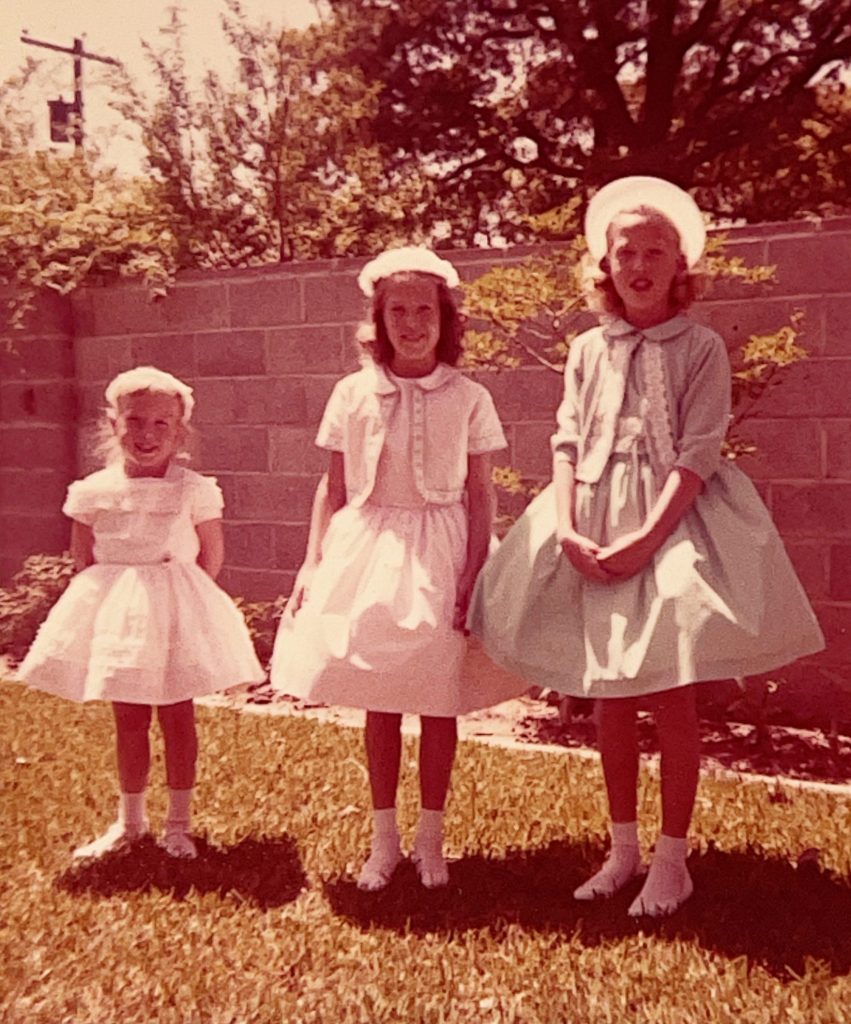
While organizing stacks of family memorabilia, I found a crumpled shirt-box of old photos. Amazingly, the pictures were still in good shape. After flipping through the top layer, I spotted an Easter line-up of me with my two sisters. I laughed and cringed, yet the photo stirred fond memories of Easter holidays.
That memory stood out vividly—my dress, at the far right, was a fresh, springy baby blue. My sisters’ dresses were in lovely shades of pink and white—three perfect little Easter eggs. As a fashion professor, I immediately recognized the origins of this classic style: Dior’s New Look!
Reflecting on Dior’s impact, his tight waists and full skirts were revolutionary in defining the direction of fashion following WWII. Introduced in 1947, after years of wrenching sacrifices, the folds of luxurious fabric and the crisp tailoring of jackets signaled a return to the days before the war.
“…everyone was seated, and there was a moment of hush that made my skin prickle. The first girl came out, stepping fast, switching with a provocative swinging movement, whirling in the close-packed room, knocking over ash trays with the strong flare of her pleated skirt, and bringing everyone to the edges of their seats in a desire not to miss a thread of this momentous occasion.”
Ballard, Bettina. In My Fashion (V&A Fashion Perspectives) (p. 244). V&A Publishing. Kindle Edition.
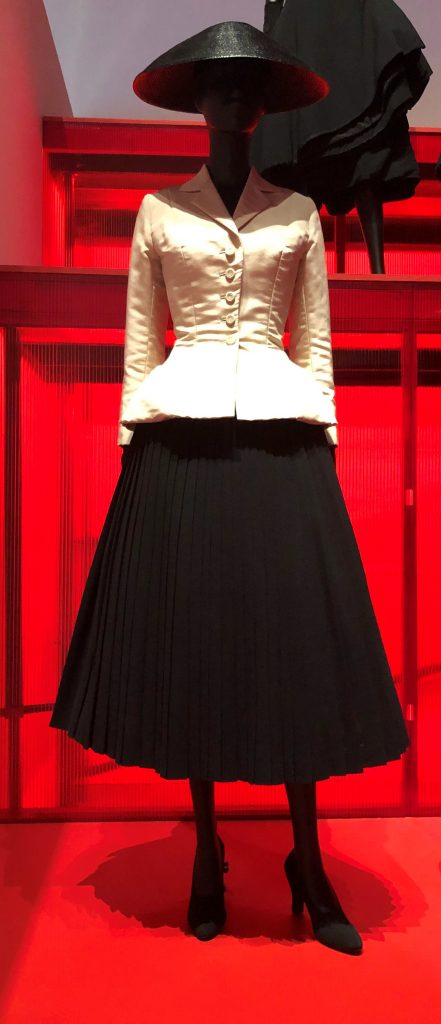
It’s no surprise, then, that our dresses reveal so much about the accepted fashion norms for young girls in Texas during the mid-’60s. Fifteen years after the launch of Dior’s New Look, our Easter dresses are reminiscent of the full skirts and charming hats of the post-war years.
From a broader perspective, our Easter dresses illustrate the “trickle-down” effect: originating in haute couture, moving into mainstream womenswear, and then into children’s apparel. Notably, Dior’s fresh new look, first popularized in the mid-20th century, has endured for young girls, as variations of this silhouette remain a popular choice for holidays and flower girls today.
On a lighter note, achieving the “puffy” full-skirted look meant wearing unbearably itchy under slips—yet another example of suffering for fashion.