• Full Skirts and Spring Hats

    Three years ago, as I experimented with blogging, I wrote this short essay. So I’m pulling it out of the archive and reposting (with edits) as a tribute to the memories I treasure of Easter with my family.
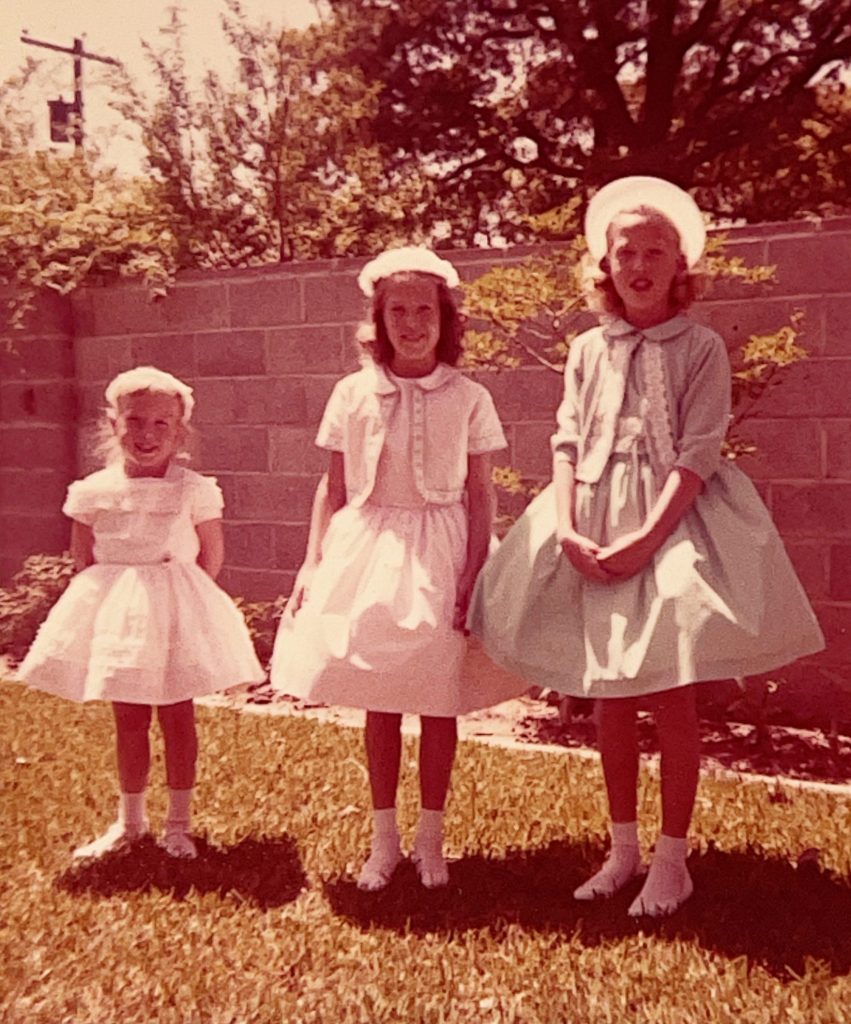
    While organizing stacks of family memorabilia, I found a crumpled shirt-box of old photos. Amazingly, the pictures were still in good shape. After flipping through the top layer, I spotted an Easter line-up of me with my two sisters. I laughed and cringed, yet the photo stirred fond memories of Easter holidays.

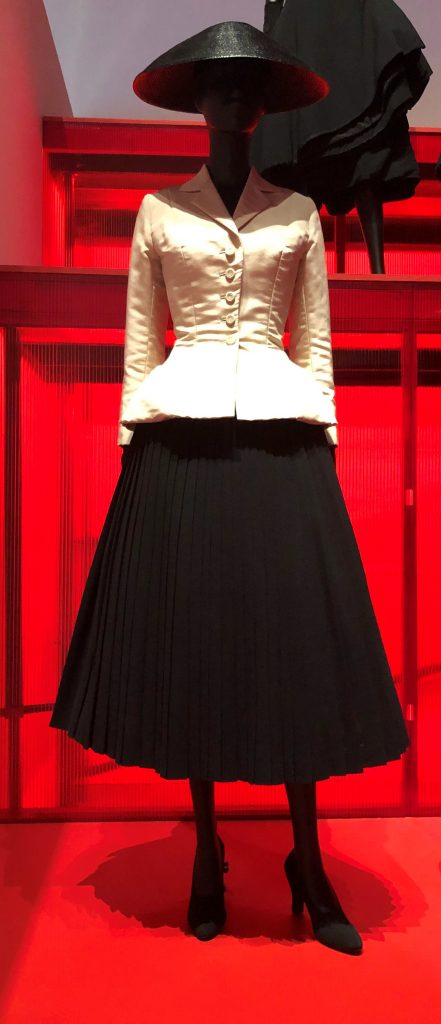
    That memory stood out vividly—my dress, at the far right, was a fresh, springy baby blue. My sisters’ dresses were in lovely shades of pink and white—three perfect little Easter eggs. As a fashion professor, I immediately recognized the origins of this classic style: Dior’s New Look!

    Reflecting on Dior’s impact, his tight waists and full skirts were revolutionary in defining the direction of fashion following WWII. Introduced in 1947, after years of wrenching sacrifices, the folds of luxurious fabric and the crisp tailoring of jackets signaled a return to the days before the war.

    Dior, Dallas Museum of Art, 2019

    It’s no surprise, then, that our dresses reveal so much about the accepted fashion norms for young girls in Texas during the mid-’60s. Fifteen years after the launch of Dior’s New Look, our Easter dresses are reminiscent of the full skirts and charming hats of the post-war years.

    From a broader perspective, our Easter dresses illustrate the “trickle-down” effect: originating in haute couture, moving into mainstream womenswear, and then into children’s apparel. Notably, the “s “new look, first popularized in the mid-20th century, has endured for young girls, as variations of this silhouette remain a popular choice for holidays and flower girls today.

    On a lighter note, achieving the “puffy” full-skirted look meant wearing unbearably itchy under slips—yet another example of suffering for fashion.
  • Art School: Weeks 7 and 8

    In our journey to learn about modern and contemporary art at MFAH, the class topics for the next two weeks centered on art media rather than art movements. The class content completely upturned my decision about what to write for my semester assignment.

    Week 7: Sculpture

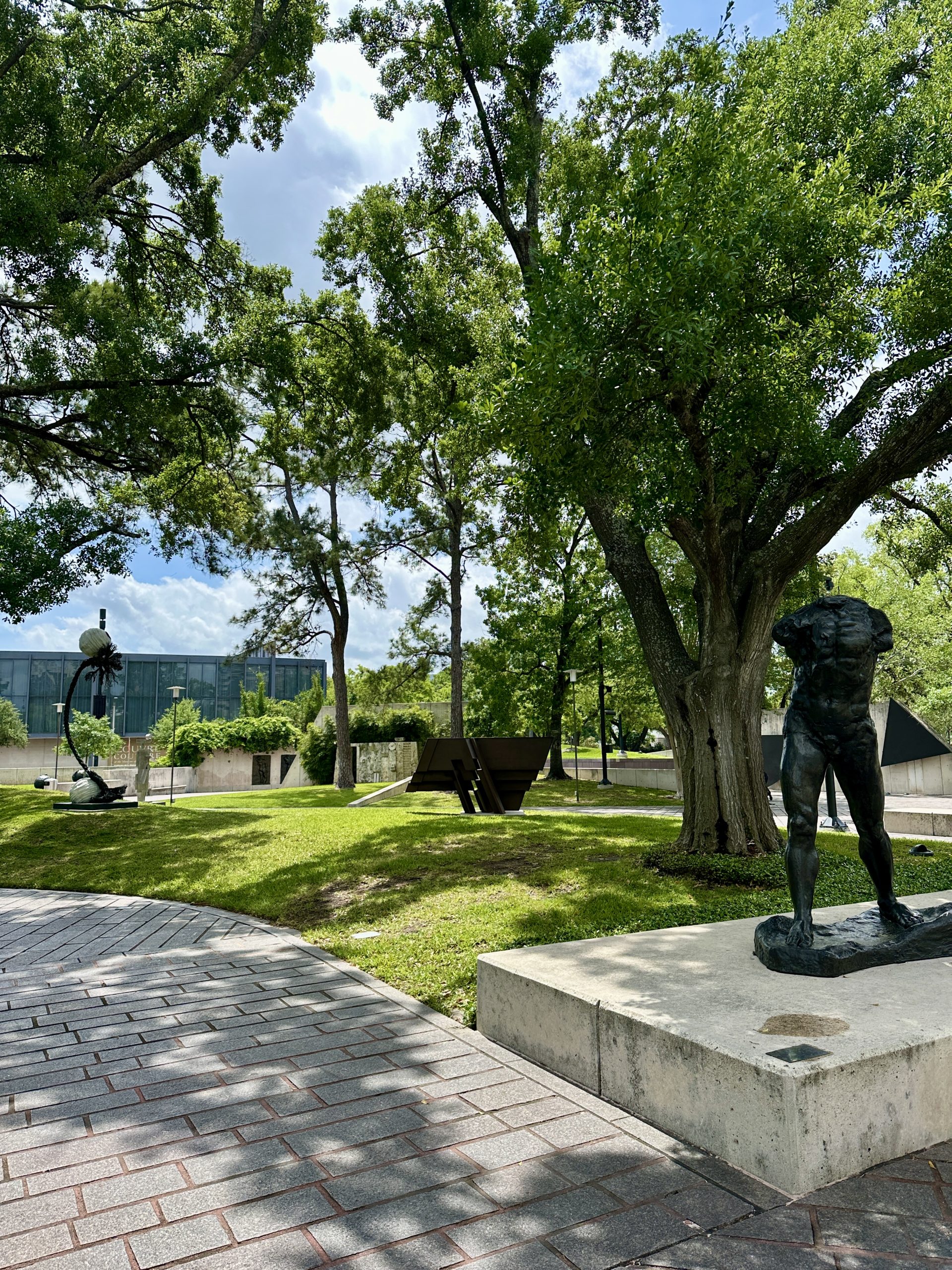
    Over the years, visiting art museums, I’ve rarely spent time engaging with sculpture. Thankfully, the class topic for week 7, the Lillie and Hugh Roy Cullen Sculpture Garden, is a much-needed start toward building a more informed appreciation of sculpture.

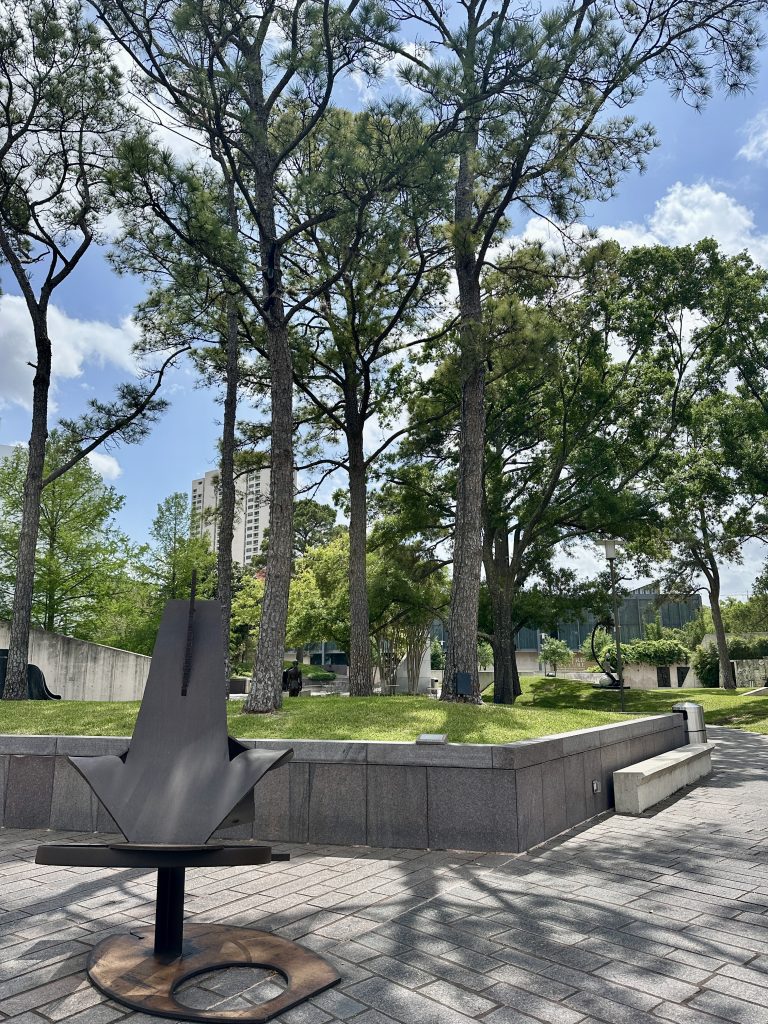
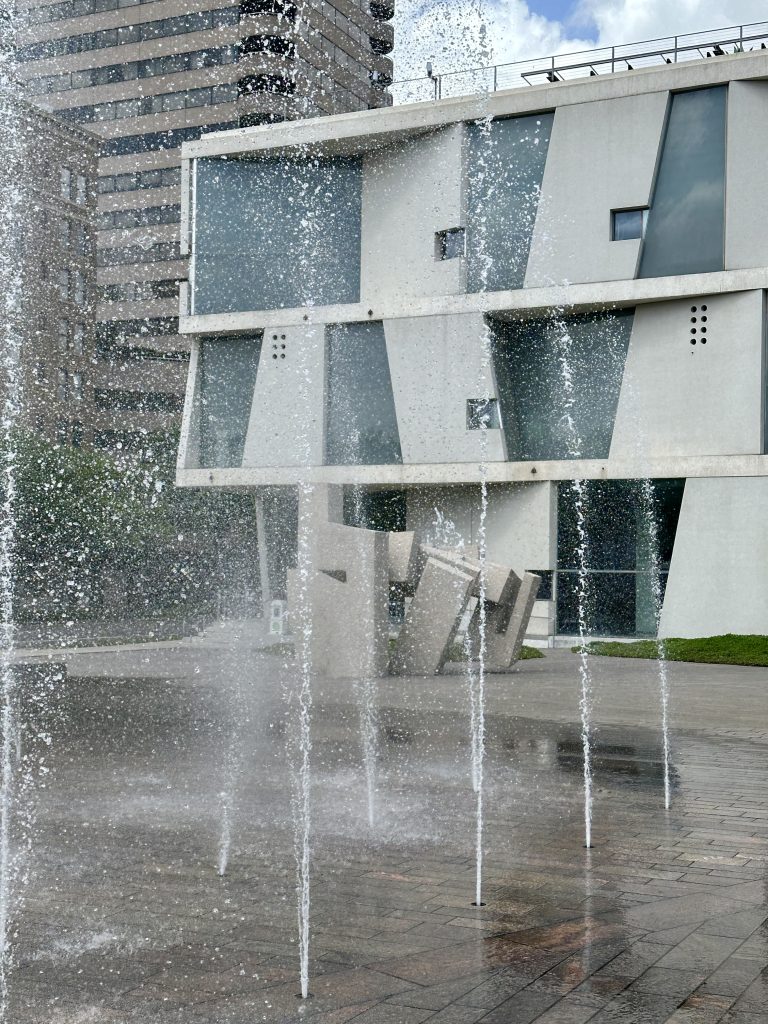
    Photographs taken at the Lillie and Hugh Roy Cullen Sculpture Garden, April 1, 2026.

    The sculpture garden, opened in 1986, was designed by Isamu Noguchi, an American sculptor and landscape architect. Encouraging visitors to relax and interact with its features, the garden connects two major buildings on the MFAH campus, The Glassell School of Art and the Nancy and Rich Kinder Building. A feast for the eyes, a walk through the garden is a sensual experience blending art and nature.

    Week 8: Assemblages and Hybridization

    Like sculpture, an assemblage is three-dimensional, but the artist uses existing objects or materials, such as wood, paper, metal, or even trash, to create a finished work. Hybridization differs from assemblage in that it aims to blend or fuse concepts or styles to produce an entirely new form.

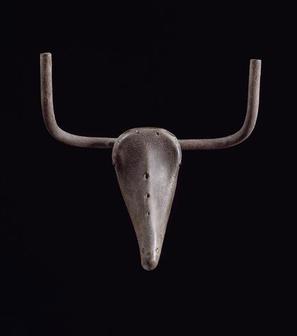
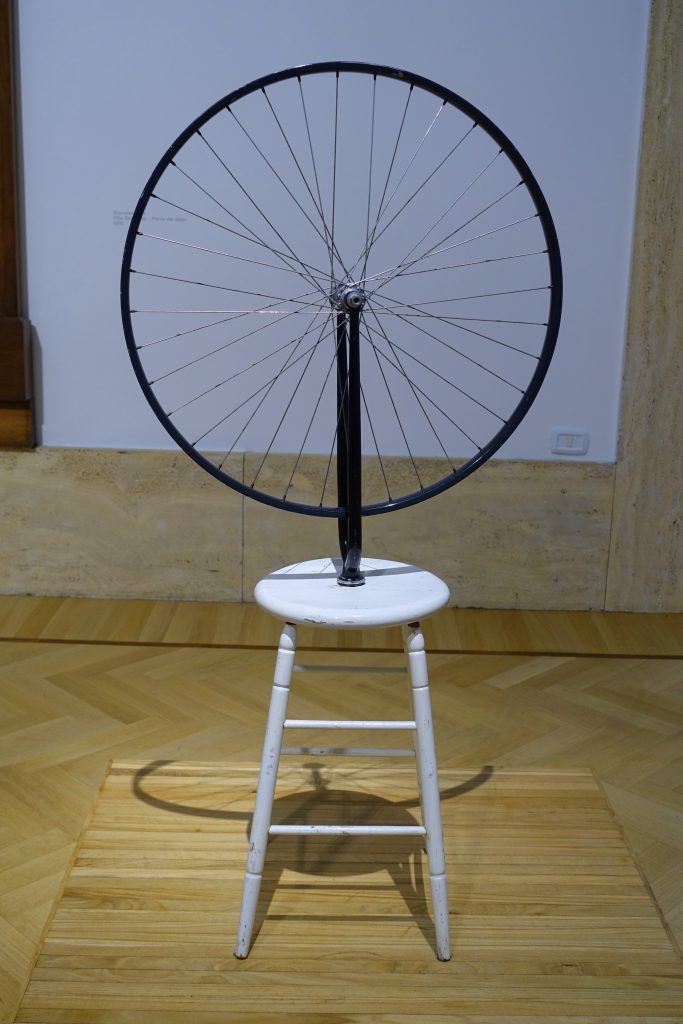
    Two well-known examples of assemblage are Pablo Picasso’s Bull’s Head (1942) and Marcel Duchamp’s Bicycle Wheel (1913). Created with found objects, both works encourage us to use our imagination in a playful approach to decipher the message or meaning in the art.

    Pablo Picasso, 1942, Tête de taureau (Bull’s Head), bicycle seat and handlebars, Musée Picasso, Paris
    Marcel Duchamp, Bicycle wheel, 1913, this version 1964, Galleria Nazionale d’Arte Moderna e Contemporanea , Rome

    Visual Analysis: Louise Bourgeois

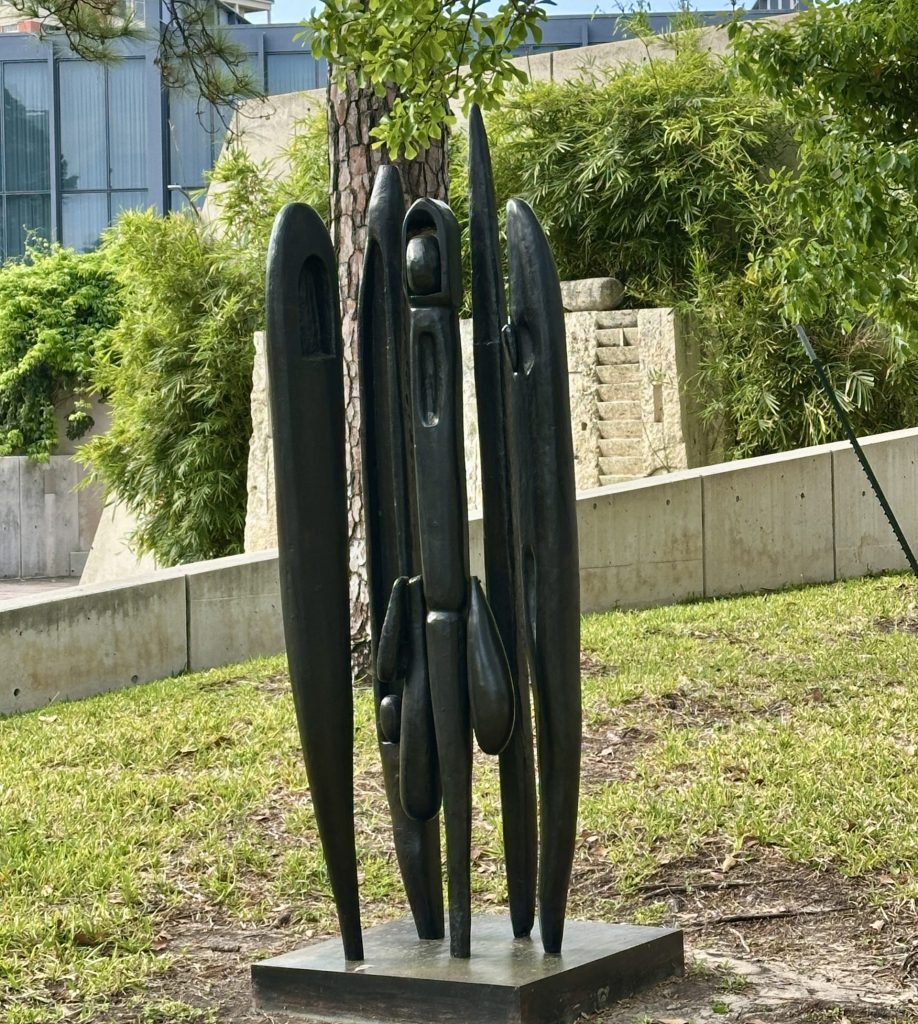
    At the conclusion of each class, one work from the lecture is the subject of an exercise in practicing visual analysis. Our discussion week 7 centered on Quarantania I, a bronze sculpture in the Cullen garden by Louise Bourgeois. I’ll admit, until recently, I knew very little about this remarkable artist.

    Photograph taken at the Lillie and Hugh Roy Sculpture Garden on March 28, 2026.

    A simple description of this piece belies the deeper associations embedded in her work. When Bourgeois was in her late twenties, she moved from her home in France to New York with her husband, art historian Robert Goldwater. This work, along with other similar sculptures, captures the emotions of loss and longing for the friends and family she left behind. The central structure, Woman with Packages, represents herself and her maternal bonds with her children, depicted as three oblong-shaped objects attached to her body.1 More information about this work is available on the MFAH website.

    Today, I begin writing my semester assignment, so I am taking a break for a couple of weeks. Next up will be Week 11: Minimalism and Pop Art.

    1. The Museum of Modern Art, https://www.moma.org/collection/works/81955. Accessed March 26 2026.
      ↩︎
  • Art School: Week 6

    White, Kit. 101 Things to Learn in Art School. Paperback edition, MIT Press, 2024.

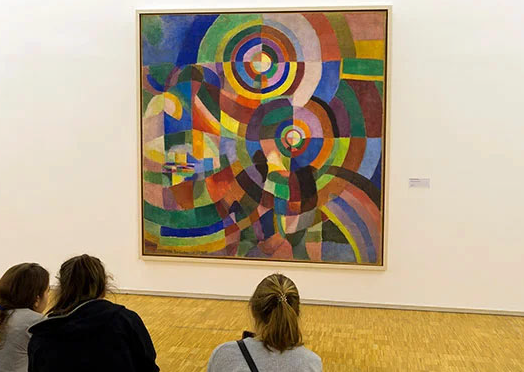
    Interpreting the meaning of art can be particularly difficult when the subject or object isn’t familiar or “representational.” Typically, it’s easier to understand figurative art, for example, when a painting is a portrait or still life rather than abstract art. Historically, then, how did the art viewed as the best of its time evolve from depicting reality to undecipherable variations in color, line, and/or shape?

    Sonia Delaunay, Prismes Électriques, 1914, Musée National d’Art Moderne, Paris, France. Peter Barritt /Alamy

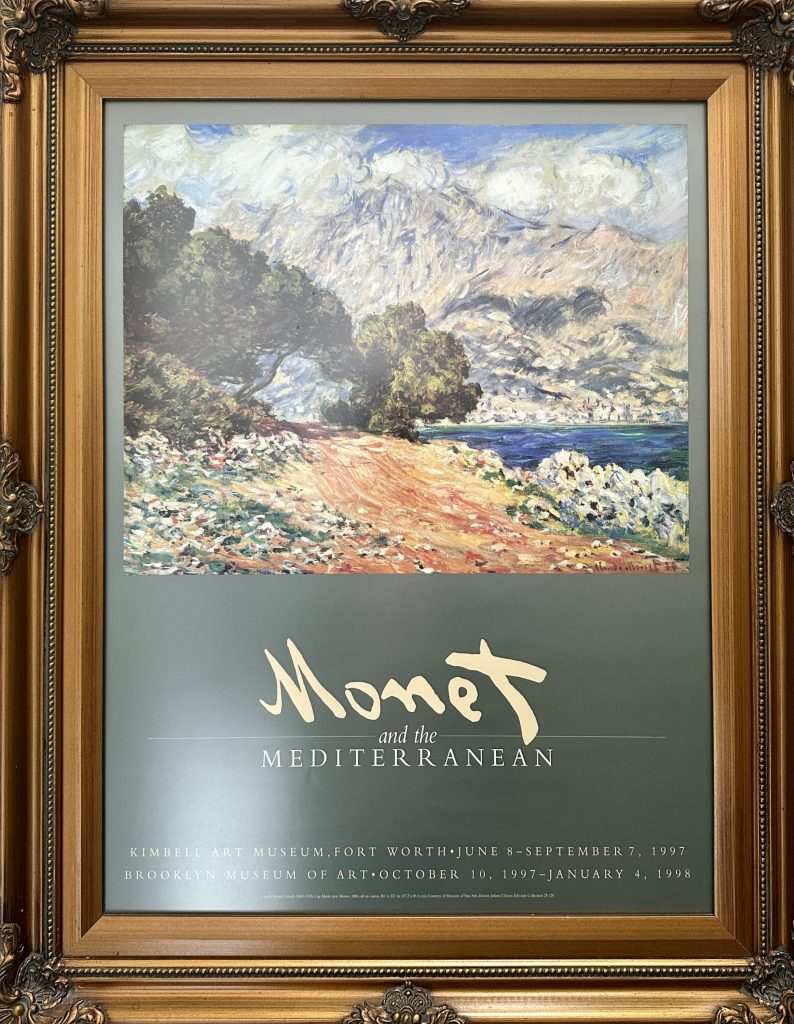
    During the late 19th century, artists such as Monet, an Impressionist, and Van Gogh, a Post-Impressionist, used innovative approaches to express a less formal, more subjective interpretation of the world. Using easels in the open air (en plein air), these artists captured perceptions of light and color in the moment. The quick brush strokes and unmixed pigments created an effect that seemed unfinished, a significant departure from the accepted classical style.

    Poster from my visit to the exhibition in 1997.

    In 1905, a group of avant-garde French artists presented work at the Salon d’Automne in Paris. So bold and intense were the paintings, both in color and brushwork, that art critic Louis Vauxcelles referred to the group as the Fauves, or “wild beasts.”  Fauvism paved the way for several art movements collectively known as Modernism, including Cubism, Expressionism,  and Orphism, ultimately leading to Abstract Expressionism by the middle of the twentieth century.

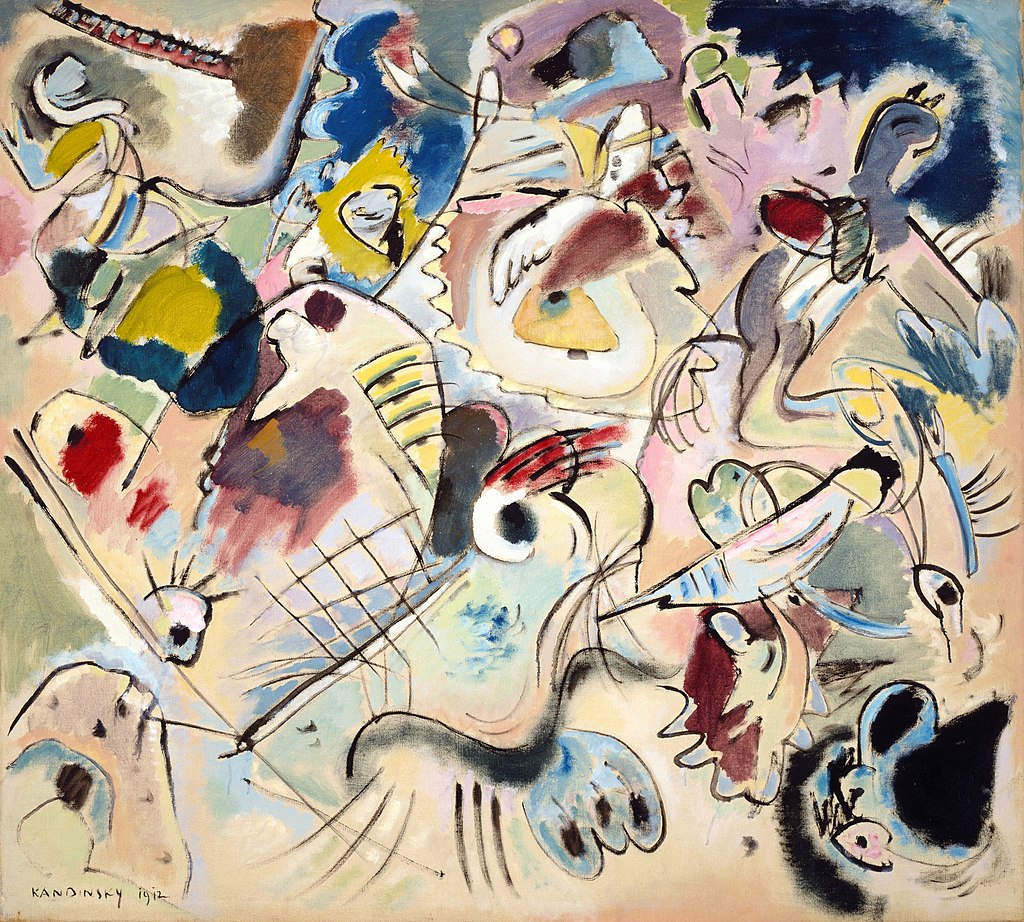
    At the end of class, students participated in a visual analysis of a 1912 work by Vassily Kandinsky. A key figure in the German Expressionism movement, Vasily Kandinsky also presented work at the Salon d’Automne from 1904 to 1910.1

    Vasily Kandinsky, Sketch 160A, 1912. https://emuseum.mfah.org/objects/1551/sketch-160a. Accessed 12 Mar. 2026.

    At first glance, the sketch appears chaotic, full of wildly disorganized lines, contrasting vivid and subdued colors, and a confusion of shapes. On further study, recognizable images seem to emerge – perhaps a bird or fish. In the upper right-hand corner, a man appears to ride a horse, skyrocketing toward the edge of the sketch. Could a piano be hiding in the work as well? It would not be surprising. Kandinsky blended his sensual connection to music with the spirituality expressed visually in his art. According to the Beck Collection catalog, the composition is an “allegory of the struggle between good and evil.”2 

    One last note: I chose a topic for my writing assignment! The sooner I get started, the better. More to come after Spring Break.

    Next Up: The Cullen Sculpture Garden

    1. Museum of Fine Arts, Houston. The Collection of John A. and Audrey Jones Beck. Edited by Audrey J. Beck, Rev, Museum of Fine Arts Houston, 1998, p. 70.
      ↩︎
    2. Ibid. ↩︎